The True Price of Coming Home: A Strategic Assessment of Supply Chain Reshoring for US Manufacturers
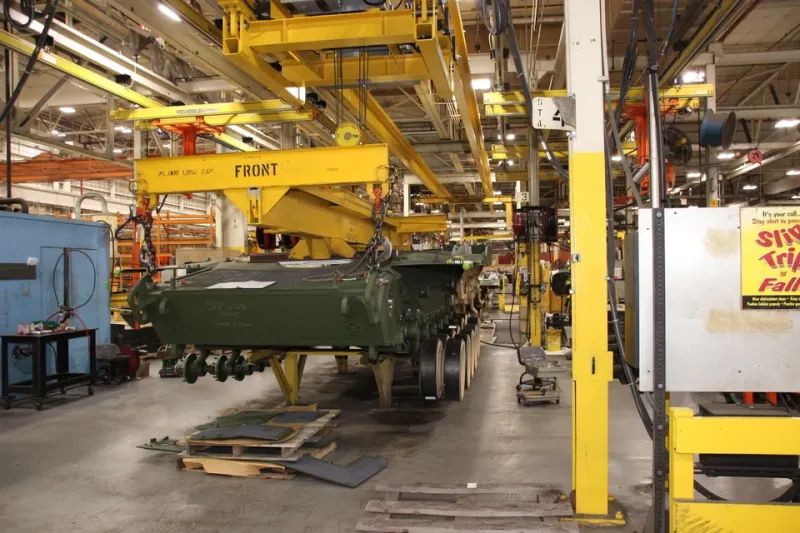
Photo: Brian Hahn, Public domain, via Wikimedia Commons
For decades, the logic of offshoring seemed unassailable. Lower labor costs, favorable trade agreements, and a globalized logistics network made manufacturing abroad the default choice for American companies seeking to protect margins. That consensus has unraveled with remarkable speed.
Geopolitical friction with China, the supply chain disruptions exposed by the COVID-19 pandemic, and a wave of federal incentives — from the CHIPS and Science Act to the Inflation Reduction Act — have pushed reshoring from a fringe strategy to a mainstream operational priority. According to the Reshoring Initiative, US companies announced more than 350,000 reshoring-related jobs in 2022 alone, a record that has since been approached again in subsequent years.
But enthusiasm and execution are different things. The companies that are navigating this transition successfully are doing so with clear eyes about what it genuinely costs — and what it genuinely returns.
Why Companies Are Moving Now
The drivers behind reshoring are not monolithic. For some organizations, the decision is fundamentally defensive: reducing exposure to single-source suppliers in politically volatile regions. For others, it is opportunistic — capturing federal subsidies that meaningfully alter the financial case for domestic production.
Then there is the customer dimension. A growing segment of US buyers, both in the B2B and consumer sectors, are placing measurable value on domestic supply chains. For manufacturers selling to the Department of Defense, domestic sourcing has moved from preference to contractual requirement in many categories.
Executives interviewed across the industrial and consumer goods sectors cite a consistent theme: the pandemic did not create the case for reshoring, but it made that case impossible to ignore. "We had always known concentration risk was a vulnerability," noted one operations vice president at a mid-sized automotive components firm that completed a partial reshoring of its stamping operations in 2023. "What changed was our board's appetite for carrying that risk on the balance sheet."
The Costs That Catch Companies Off Guard
The visible costs of reshoring — capital expenditure on domestic facilities, higher labor rates, equipment procurement — are well understood in theory and routinely underestimated in practice. The hidden costs are where many transitions stumble.
Workforce development is among the most significant. Skilled manufacturing labor in the United States is genuinely scarce in many regions, and the training timelines required to build competency in precision manufacturing, for example, can extend 18 to 36 months. Companies that model their reshoring economics against offshore labor rates without accounting for domestic training costs and ramp-up periods often find their projections materially off.
Supplier ecosystem gaps present a related challenge. Domestic production frequently depends on inputs — specialty resins, rare earth components, particular grades of steel — that are themselves sourced internationally. Reshoring an assembly operation without simultaneously addressing upstream inputs can reduce resilience rather than improve it.
Regulatory compliance adds a layer of cost that is easy to underestimate, particularly for companies that have operated offshore for extended periods. Environmental permitting, zoning, OSHA compliance, and state-level regulatory requirements vary considerably across US regions and can add both time and capital to facility buildouts.
A practical framework for assessing total cost of reshoring should include: fully-loaded labor costs including benefits, a realistic timeline to operational efficiency, input sourcing costs at domestic or nearshore rates, one-time transition costs including severance and supplier renegotiation, and the opportunity cost of capital deployed.
Who Is Getting It Right
The reshoring transitions that have generated the strongest returns share several characteristics. First, they tend to involve companies that moved deliberately rather than reactively — organizations that began scenario planning before a crisis forced their hand.
A specialty electronics manufacturer headquartered in the Midwest offers an instructive case. Beginning in 2020, the company conducted a 14-month analysis of its existing supply chain, identifying the specific product lines where domestic production would be cost-competitive within a five-year horizon given projected freight costs, tariff trajectories, and available federal incentives. Rather than reshoring its entire operation, it brought back production of its highest-margin, most technically complex products — those where quality control and speed-to-market justified the cost premium — while maintaining offshore relationships for commodity components.
The result was a domestic footprint that was smaller and more defensible than a wholesale reshoring effort would have produced, with a return on invested capital that the company's CFO described as exceeding initial projections by approximately 20 percent over the first three years.
The lesson here is selectivity. Reshoring is rarely a binary decision. The most financially sound approach typically involves a rigorous, product-by-product or category-by-category assessment rather than a wholesale pivot.
When Reshoring Remains a Strategic Liability
For all the momentum behind domestic production, reshoring is not the right answer for every company or every product category. Labor-intensive assembly of low-margin goods, for instance, remains extraordinarily difficult to produce competitively in the United States without either significant automation investment or a willingness to accept margin compression.
Small and mid-sized companies without access to federal incentive programs — or those whose products do not qualify under existing legislation — face a steeper hill. For these organizations, nearshoring to Mexico or Central America may offer a more pragmatic middle path: reduced geopolitical exposure, improved logistics economics, and access to a growing skilled labor base without the full cost burden of domestic production.
The critical discipline is rigor. Companies that have approached reshoring as a brand narrative rather than a financial strategy have, in several notable cases, reversed course within two to three years — absorbing both the original transition costs and the costs of re-offshoring.
Building a Framework for the Decision
Terran International advises clients to approach the reshoring question through three sequential filters.
The first is strategic alignment: Does domestic production serve a defensible business objective — regulatory compliance, customer requirement, risk reduction — or is it primarily a marketing positioning exercise? The former justifies deeper financial commitment; the latter demands greater skepticism.
The second is financial viability over a realistic horizon: A five-to-seven-year model that incorporates conservative assumptions about labor availability, input costs, and capital expenditure will reveal whether the economics are genuinely supportive or dependent on optimistic projections.
The third is execution capability: Does the organization have the operational leadership, regional relationships, and workforce development capacity to execute a reshoring transition? Companies that lack these capabilities internally should consider whether a partnership with a domestic contract manufacturer might achieve similar strategic objectives at lower organizational cost.
The reshoring wave is real, and for many American companies it represents a genuine opportunity to build more resilient, strategically defensible supply chains. But the companies that will benefit most are those that approach the decision as a rigorous business case — not a reflexive response to geopolitical anxiety or a headline-driven impulse. Coming home, done right, can be a powerful competitive move. Done poorly, it is an expensive lesson.